Prove It On Your Parts Before You Commit Capital

Applications Lab

Send us your substrate and we will coat and cure it on production-representative equipment in Macomb, Michigan — then send your parts back with the process data behind them. It is how a UV conversion gets de-risked before anyone signs off on a line.

Allied UV applications lab testing
A Working Production Environment

What is in the lab

Our applications lab runs the application methods and cure technologies we build production processes around — arc, microwave and LED — so a trial shows what a real line will do with your parts, on a configuration we already know performs.

3D spray & cure

Chain-on-edge system across 1,000 sq ft with six UV lamp heads, for discrete parts and complex geometry.

Tube line

Vacuum coater with microwave cure and four UV lamp heads — the setup behind our pipe and tube work.

Flat line

Roll coater with thermal oven, microwave and four UV lamp heads, for sheet and flat stock.

LED curing systems

LED arrays from multiple manufacturers, for both conveyor and discrete part handling.

Container & closure line

Build stage with LED and microwave capability for packaging and closures.

Arc lamp conveyor

Plus small and medium conveyor units and supporting ancillary systems.

Cured on configurations we know perform

Most customers come to us moving to UV for the first time, from water-based, solvent or a thermal process. Part of the trial is working out what the line should look like — lamp type, applicator and line speed — so we run your samples on setups we know perform, using equipment from the UV lamp suppliers we trust, rather than piecing together something unproven. If you already run a UV line, tell us what you have and we will work within it where the chemistry allows, and say so plainly when a different cure setup would serve you better.

That applies to arc and microwave lamps as much as LED. Each cures differently, and the formulation changes accordingly.

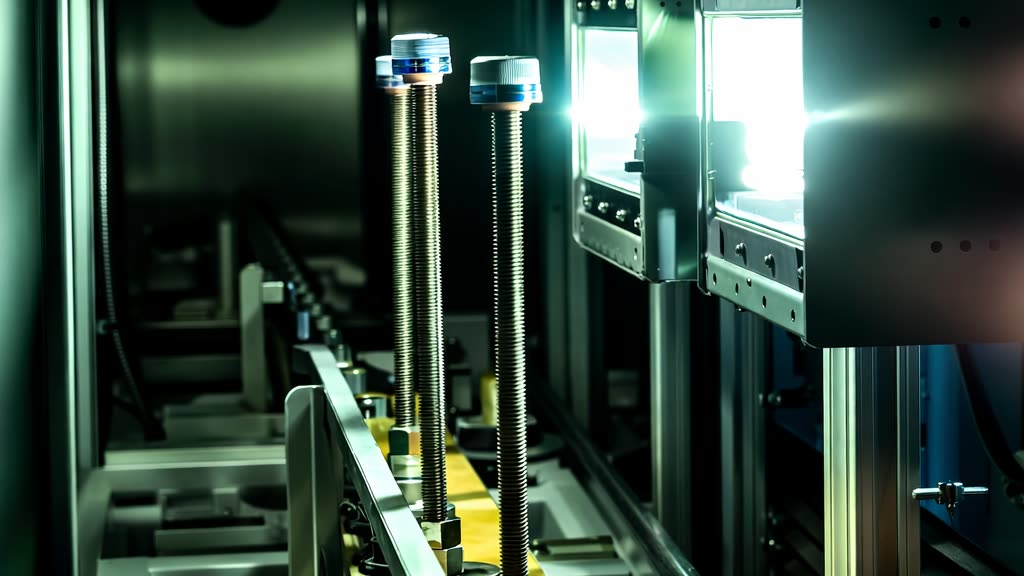
Caps on spindles passing under UV lamp heads on the container and closure line

Testing and validation

A coating that looks right is not a qualified coating. We test cured parts for the conditions they will actually face, on four kinds of accelerated weathering and corrosion equipment in house:

Salt fog

Continuous salt spray to ASTM B117 — the standard corrosion benchmark most specifications still call out.

Q-Fog

Cyclic corrosion, alternating salt fog with dry and humid stages. Closer to real atmospheric exposure than straight salt spray.

Q-Sun

Xenon-arc full-spectrum sunlight, for color and gloss retention on parts that live outdoors or on a shelf under lights.

QUV

Fluorescent UV weathering — accelerates the gloss loss, chalking and cracking that sunlight causes over years.

You get your parts back along with the process window we ran them at: line speed, lamp type and cure energy, coat weight, and the results behind the finish.
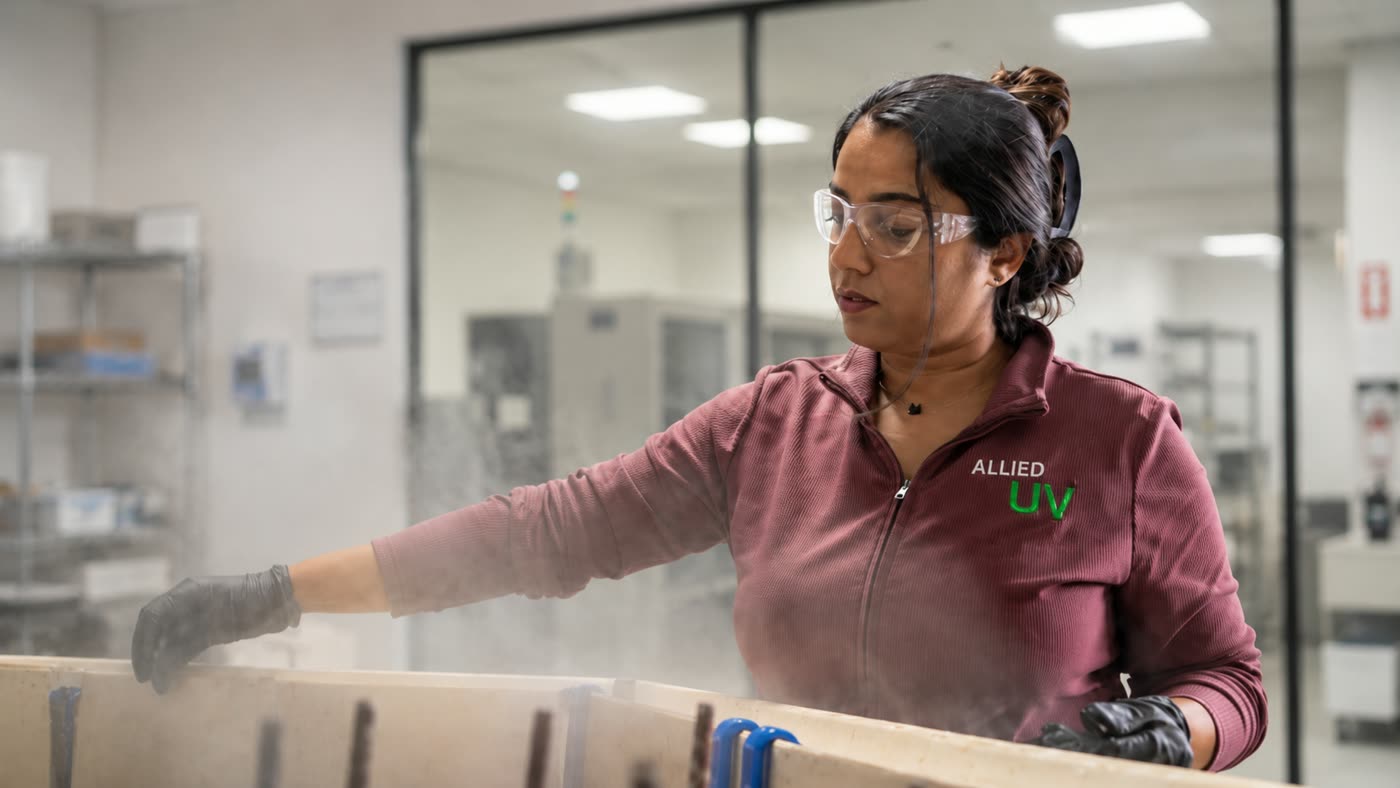
Allied UV lab technician working at the open salt fog corrosion test chamber
How Lab Work Fits

We qualify the formulation. You run the line.

Lab trials exist to prove a formulation on your substrate before you invest — small batches on your samples, not production runs. Allied is a coatings manufacturer: we do not provide contract or toll coating services. If you need parts coated in volume, we are glad to refer you to an applicator in our network.

Talk to a Specialist

Formulated to your line speed, applicator, and lamps. Supplied in production quantities with batch-to-batch QC. Lab support: send line samples, get back cured parts and data.

Note: Allied manufactures coatings — we do not coat parts. Need parts coated? Ask us for an applicator referral.

By submitting, you agree with the Terms of Use and Privacy Policy.